
-
- 1. Political developments and regulatory reforms
- 2. Major industry players
- 3. Madagascar’s mines of tomorrow
- 4. Gold: A largely informal sector
- 5. ESG best practices and mitigating political risk
- 6. Conclusion
The mining sector: A strategic pillar of Madagascar’s economy
Madagascar’s mining sector has become one of the country’s most important economic pillars, playing a critical role in exports, foreign investment, government revenues, and industrial development. Rich in natural resources such as nickel, cobalt, graphite, ilmenite, chromite, gold, and precious stones, the country possesses significant untapped mineral potential that continues to attract international mining companies and investors. The mining industry has expanded considerably over the past two decades, supported by major projects such as Ambatovy’s nickel and cobalt operation and Rio Tinto’s QMM ilmenite project.
Today, the mining sector contributes approximately 4.5–5% of Madagascar’s GDP and accounts for more than 40% of national exports, making it one of the country’s largest sources of foreign currency earnings. According to the Extractive Industries Transparency Initiative (EITI), the sector represented 43.8% of total exports in 2022, while generating important fiscal revenues for the Malagasy state. The importance of mining has increased further as Madagascar seeks to diversify its economy beyond traditional sectors such as agriculture, vanilla exports, and textiles.
Mining also plays a strategic role in employment and regional development. While large-scale industrial mining operations are highly capital intensive, the artisanal and small-scale mining sector provides livelihoods for hundreds of thousands of Malagasy workers, particularly in gold, sapphire, and gemstone extraction. Some estimates suggest that artisanal mining supports nearly one million jobs directly or indirectly across the country. In remote regions, mining projects often stimulate the construction of roads, energy infrastructure, schools, healthcare facilities, and logistics networks, contributing to broader economic activity.
In recent years, Madagascar has gained growing international attention because of its reserves of critical minerals used in EV batteries and clean energy technologies. The country is among the world’s major producers of graphite and possesses significant nickel and cobalt reserves, positioning it strategically within the global energy transition. This creates opportunities for Madagascar to become a key supplier in future battery and renewable energy supply chains.
Despite its importance, the mining sector also faces significant challenges. Governance issues, illegal mining, environmental degradation, weak infrastructure, and limited local value addition continue to constrain the full economic benefits of the industry. Experts note that while mining contributes strongly to exports, its impact on poverty reduction and industrialization remains below potential. Strengthening regulation, transparency, local processing capacity, and community development programs will therefore be essential if Madagascar is to maximize the long-term benefits of its mineral wealth.
1. Political developments and regulatory reforms
Madagascar possesses one of Africa’s most underdeveloped but strategically important mineral portfolios. Yet despite its enormous geological potential, the sector continues to face persistent challenges related to political instability, permitting delays, social acceptance, informality and governance.
Madagascar adopted a revised Mining Code in 2023 (Law N° 2023-007) aimed at modernizing the sector’s regulatory framework, strengthening state revenues, and aligning the country more closely with international mining standards and ESG expectations. However, while the code itself was adopted relatively quickly, implementation has proven much more difficult.
The objective of the reforms was to make the sector attractive, transparent and accessible again, similar to the wave of foreign investment that entered Madagascar during the early 2000s. The decrees on the mining permit regime, and on the gold regime, were adopted in July 2024, while the interministerial order lifting the suspension on gold exports and the order resuming the processing of pending mining permit applications had already been signed in April 2023. However, the reopening of new mining permit applications, including AERP (Exclusive Perimeter Reservation Authorization) applications, was only adopted by the Council of Ministers in November 2025, with the actual intake of files beginning on 21 May 2026.
Further decrees on Strategic Mineral Substances (SMS) and Mining Projects of National Interest (PMIN) were adopted in April 2026. However, key elements of the broader regulatory framework remain unfinished, including the decree implementing the Mining Fund for Social and Community Investment (FMISC) and the planned overhaul of the Law on Large Mining Investments (LGIM) into the Law on Large-Scale Mining Operations and Projects (LGEPM). As a result, uncertainty has persisted around the issuance, processing and practical treatment of mining permits.
The FMISC is one of the more notable pending reforms. Designed as a social and community mining fund, it would require mining operators to make upfront contributions at the permitting stage, ensuring that companies support local social and environmental development before production begins. This is particularly relevant for smaller operators that may not have well-developed ESG or corporate social responsibility frameworks.
Despite these reforms, several application decrees took years to finalize, and many practical obstacles remained regarding the issuance and treatment of mining permits. Obtaining mining permits remained difficult in practice, and administrative delays, political uncertainty and overlapping institutional processes slowed project advancement across the country. Although a Mining Cadastre clean-up plan was adopted in September 2024, implementation has been slow. Some permits have since been cancelled, but no new research permits (PR — Permis de Recherche) or exploitation permits (PE — Permis d’Exploitation) have yet been signed. Companies wishing to maintain their rights have also had to regularize outstanding administrative fee payments (FA — Frais d’Administration), as well as update their PRSE plans (Plans de Responsabilité Sociale et Environnementale), work programs and financing plans (PTPF — Programme de Travail et Plan de Financement). At the same time, some permit cancellations perceived as arbitrary have been challenged before the Council of State (Conseil d’État), with companies such as Madagascar Kashing Mining, holder of an ilmenite project in Fénérive on the east coast, as well as ‘Access Mining’ reportedly obtaining favourable rulings.
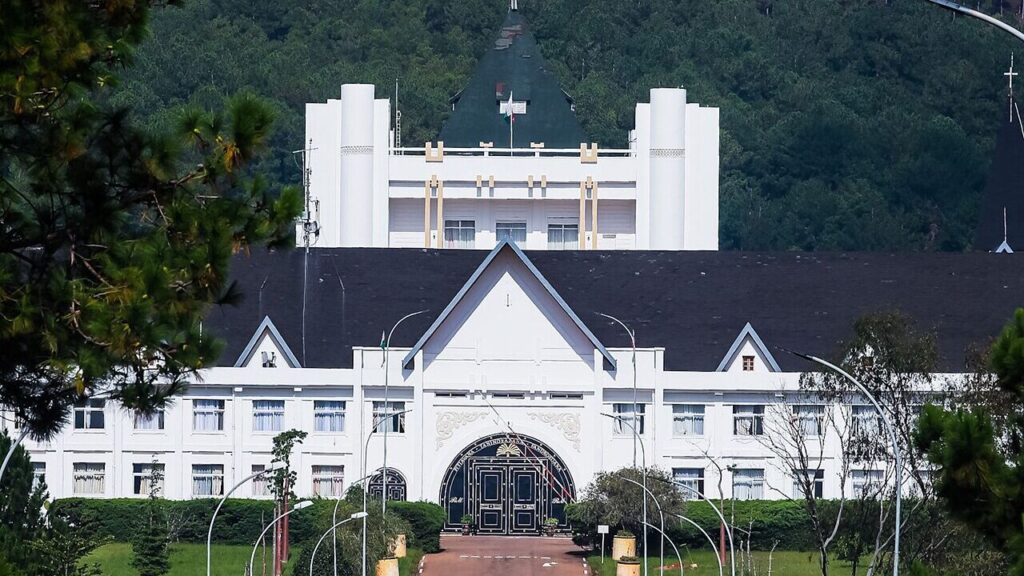
Today, political instability remains one of the mining sector’s biggest challenges. Madagascar has experienced significant political unrest since the 2025 crisis, which culminated in the intervention of the military-backed CAPSAT unit, the suspension of several state institutions, and the establishment of a transitional-style administration following the departure of President Andry Rajoelina. (Washington Post)
The country continues to face concerns over governance, institutional legitimacy, economic hardship and social unrest, all of which contribute to investor uncertainty. Insights from senior mining and government stakeholders suggest that Madagascar is simultaneously attempting to reopen and modernize the sector while struggling with institutional and political tensions that continue to complicate project development.
This uncertainty has major implications for mining investment. Long-term mining agreements signed during transitional political periods could potentially be challenged by future elected governments. Concerns over continuity of state commitments remain particularly relevant for mining projects, which often require decades-long investment horizons.
Several industry participants noted that mining projects in Madagascar are often heavily affected not only by regulatory uncertainty but also by political rivalries between senior political figures. In some cases, local political conflicts and competing economic interests appear to have become more important than technical project fundamentals themselves.
2. Major industry players
One of the country’s most closely watched projects is the former Base Toliara mineral sands project, in Madagascar’s south west region. Fully acquired by Energy Fuels in 2024 and renamed “Vara Mada”, the project has changed ownership several times over the past two decades but continues to be regarded as highly attractive from a geological and technical standpoint, with world-class ore reserves.
A recent feasibility study estimated that Vara Mada could produce approximately 959,000 tonnes of ilmenite, 66,000 tonnes of zircon and 24,000 tonnes of monazite, plus 8,000 tonnes of rutile, a naturally occurring titanium dioxide mineral. The project has an initially modelled mine life of 38 years and an after-tax NPV (at 10% discount) of $1.8 billion. (Energy Fuels Press Release)
However, the project continues to face major challenges linked to social acceptance and politics, rather than technical feasibility. Local opposition, political resistance and broader governance concerns have repeatedly delayed development since 2018. This resistance has also been amplified by high-profile political figures, including President of the National Assembly Siteny Randrianasoloniaiko, who has publicly opposed the project on environmental and local impact grounds.
Recent agreements between the government and Energy Fuels have revived hopes that the project could move forward again. However, uncertainty remains over whether future administrations could revisit or challenge agreements signed during the current political period.
The situation illustrates a broader theme within Madagascar’s mining sector: technically viable projects can remain blocked for years due to social tensions, political rivalries and institutional instability.
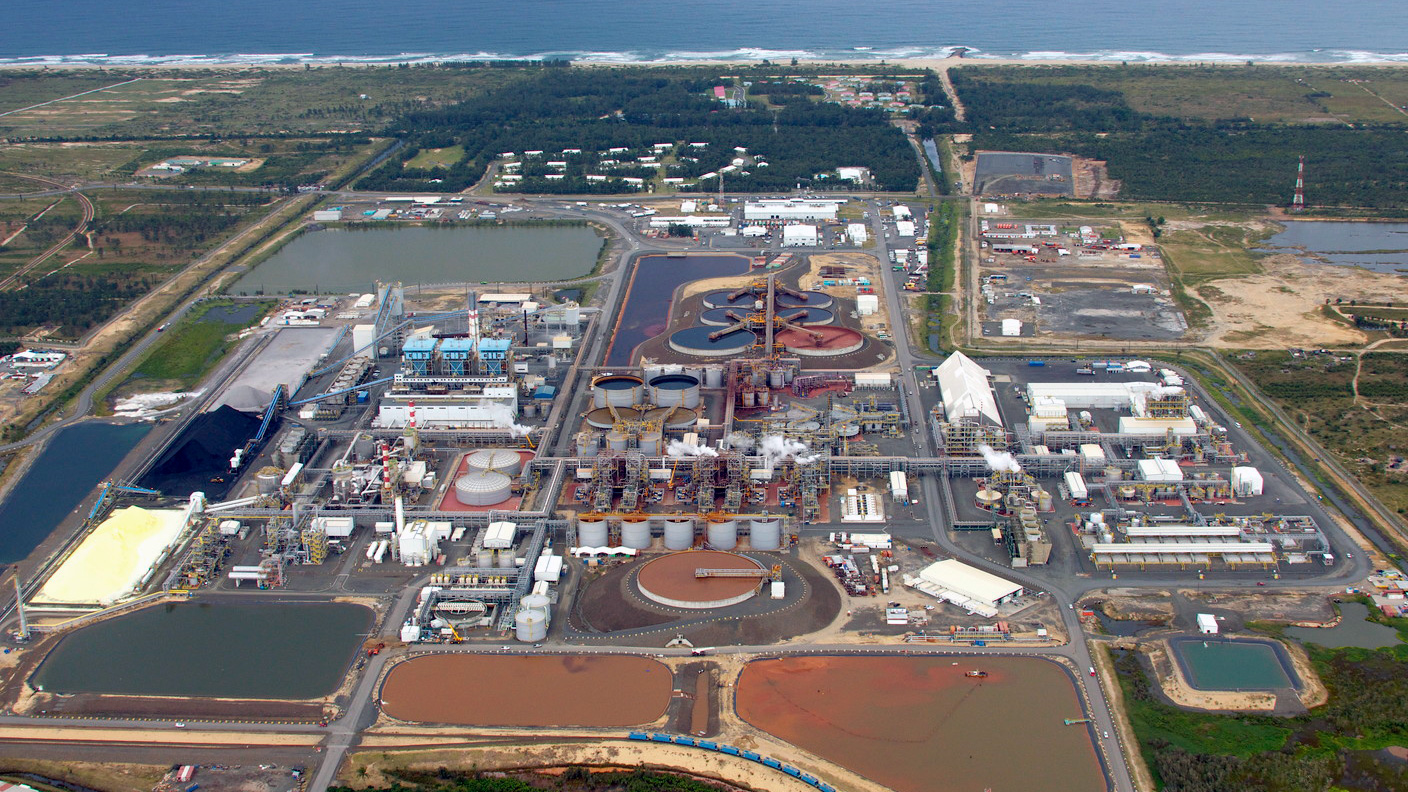
Meanwhile on the other side of the island, Ambatovy remains one of Madagascar’s most important industrial success stories after its launch 20 years ago. The nickel and cobalt mine, located in Moramanga, with a plant in the port city of Toamasina, represents the largest foreign investments in Madagascar’s history, estimated at over US$8 billion, and is considered one of the world’s largest lateritic nickel and cobalt projects.
Industry sources describe Ambatovy as a serious industrial operator with substantial environmental and social programs. The project has invested heavily in ESG, community relations and environmental management systems.
Nevertheless, Ambatovy has also faced operational and financial challenges. Stakeholders noted that the operation has struggled to consistently achieve full production capacity and has dealt with issues including theft during transportation and logistics.
The project is now entering a new chapter following the recent exit of the majority shareholder Sumitomo Corporation, which has participated in the project since 2005. On May 1st, Sumitomo Corporation announced the sale of its entire equity interest in the Ambatovy operations to UK-based Ambatovy Mineral Resources Investment Holding Company (AMRI), a consortium led by Essenwood Partners Limited in partnership with Zungu Investments. This transaction reflects broader restructuring trends occurring across the global mining industry as investors reassess exposure to nickel and battery mineral markets. (Ambatovy Press Release)
On Madagascar’s southwestern edges, Rio Tinto’s QMM ilmenite operation continues to face growing social and political pressure despite remaining one of the country’s flagship mining assets. Rio Tinto holds an 85% stake in the project through QIT Madagascar Minerals (QMM), while the Malagasy government owns the remaining 15% stake.
Community tensions have intensified in recent years, particularly following environmental controversies involving fish deaths near the QMM mining area after wastewater releases linked to tailings management incidents in 2022. While Rio Tinto and QMM denied responsibility and stated that investigations found no conclusive link between the mine and the fish deaths, community distrust and environmental concerns have remained strong amid ongoing disputes over water quality and transparency. (The Guardian)
Blockades, protests and recurring social tensions have periodically disrupted operations at QMM, particularly following environmental controversies and compensation disputes, water quality and community impacts. Reuters reported that QMM temporarily halted operations in 2022 after roadblocks and protests linked to fish deaths near the mine, while broader civil unrest and demonstrations have also been documented in recent years. (Reuters)
At the same time, Rio Tinto is reportedly conducting strategic reviews of some international assets, including QMM, raising questions about the long-term future ownership structure of the operation. (London Mining Network)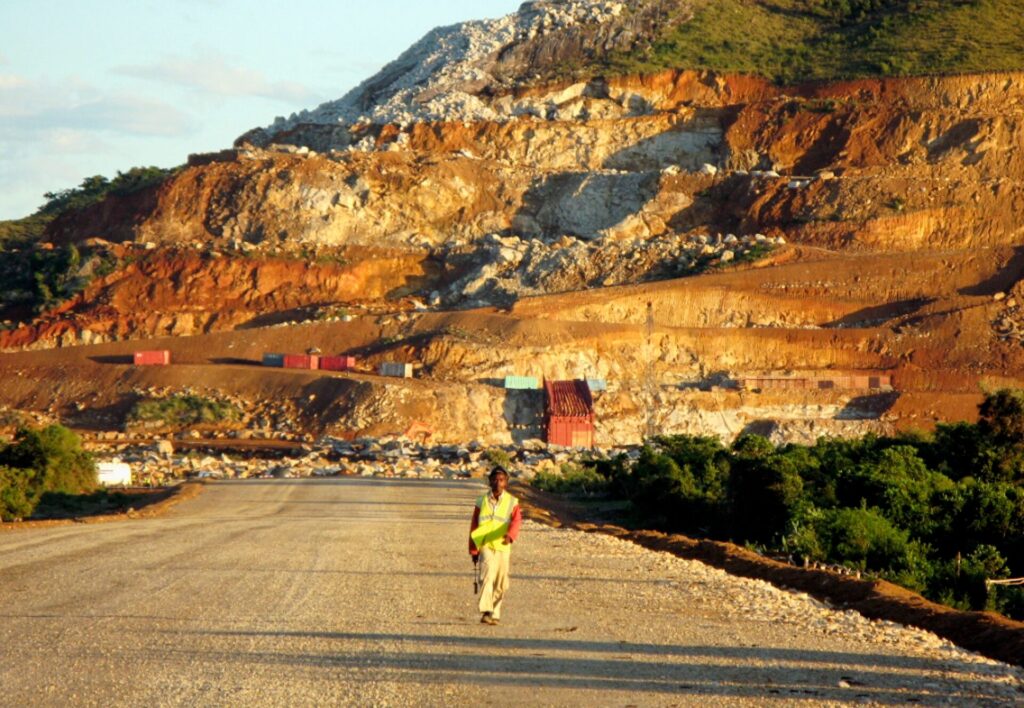
3. Madagascar’s mines of tomorrow
Madagascar’s exploration and development scene is drawing renewed investor attention as several advanced-stage projects move toward development across graphite, iron ore and rare earths. The strongest momentum is in graphite, where the country’s high-quality deposits are increasingly relevant to electric vehicle and lithium-ion battery supply chains. In the South-West Region, Evion Group/BlackEarth’s Maniry Graphite Project is positioned to produce battery-grade natural graphite and has already completed definitive feasibility work. The project is in advanced permitting and development, with discussions reportedly finalized as the company continues assessments required to secure its mining license.
Another major graphite development is NextSource Materials’ Molo Graphite Project in Fotadrevo, also in the South-West Region. Molo is described as one of the world’s largest and highest-grade superflake graphite projects and already has key infrastructure in place for production. In January 2026, NextSource also announced that the first shipment of equipment had arrived in Abu Dhabi for its proposed battery anode facility in the UAE, highlighting the company’s strategy to connect Malagasy graphite with downstream battery-materials processing. (NextSource Press Release)
Existing production capacity is also part of the sector’s appeal. Greenwing Resources’ Graphmada Graphite Mine, located at Ambatofafana in the Atsinanana Region, has operated since 2018 and benefits from two mining leases and established infrastructure. The project hosts a 61.9 million tonne graphite mineral resource grading 4.5% fixed carbon, making it one of the country’s more established graphite assets.
Beyond graphite, Madagascar’s mining pipeline includes bulk commodities and critical minerals. Akora Resources is advancing the Bekisopa iron ore project, which is known for high-grade ore with very low impurities and the potential to produce a premium concentrate grading above 68% iron. In the north-west Diana Region, Harena Rare Earths’ Ampasindava Rare Earth Project is focused on ionic clay rare earths. Its January 2026 pre-feasibility study outlined 71,000 tonnes of total rare earth oxides over a 20-year mine life, with estimated annual production of around 4,000 tonnes. Together, these projects show that Madagascar is positioning itself as a more diversified supplier of minerals essential to steelmaking, clean energy and battery technologies.
4. Gold: A largely informal sector
Madagascar’s gold sector remains overwhelmingly artisanal and informal. The country currently has no major industrial gold mining operation, with production dominated by small-scale miners such as the state-owned Kraoma, as well as informal mining.
Artisanal and small-scale gold mining (ASGM) is widespread and is estimated to occur in roughly 388 of the country’s 1,695 municipalities. Despite ratifying the Minamata Convention on Mercury in 2015, annual gold production from the ASGM sector is estimated at approximately 14 tonnes, with mercury use reaching an estimated 18 tonnes per year. (planetgold.org) Mercury amalgamation remains common in many mining areas despite regulatory restrictions, posing serious health risks to miners and nearby communities through toxic exposure and water contamination.
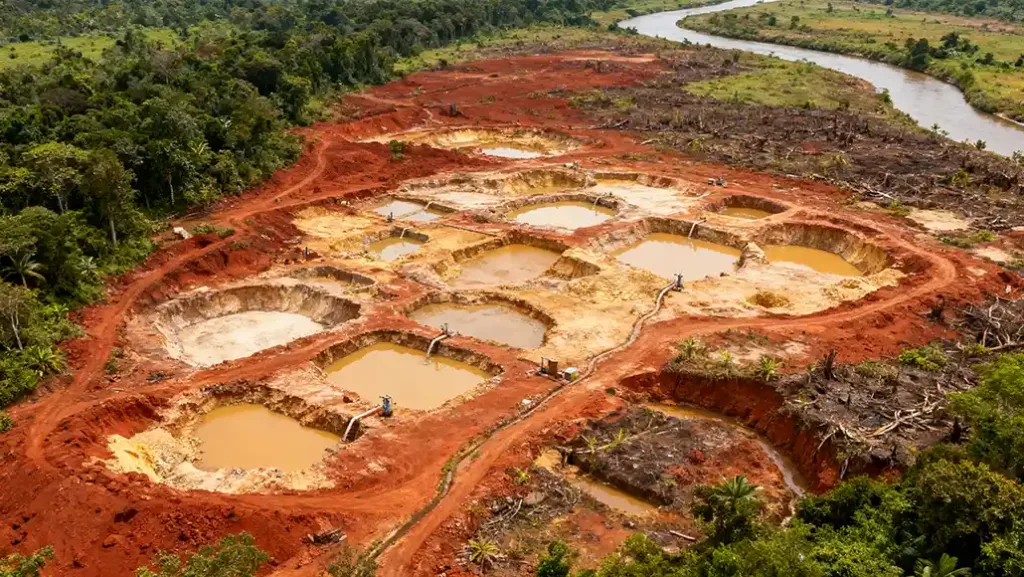
The rapid expansion of informal gold mining has also contributed to significant environmental degradation, including deforestation, soil erosion, wetland destruction, biodiversity loss and chemical pollution of rivers and ecosystems. (UNIDO)
Following concerns over widespread smuggling, illegal exports and weak state oversight of artisanal production, Madagascar suspended gold exports in 2020 as part of broader efforts to regain control of the sector. The government later moved to partially reopen and regulate gold exports in 2023, but implementation has remained inconsistent due to ongoing governance and monitoring challenges. The licenses of the six gold buying/export counters expired in 2024, after they had officially exported less than 10 kg — far below the government’s initial projections of 6 tonnes in the first year after reopening, rising to more than 15 tonnes after five years. Since then, no new gold counter licenses have been issued, although special authorizations to sell to the Central Bank are now reportedly available, with limited further information. Moreover, despite lifting a 16-year moratorium on new mining permits for most other minerals in January, the suspension on new gold permits remains due to regulatory challenges. (Reuters)
Authorities have continued to acknowledge major discrepancies between officially declared gold production and the scale of artisanal mining activity nationwide. Large quantities of Malagasy gold reportedly continue to flow informally and illegally to international markets, particularly trading hubs such as Dubai.
In response, the Central Gold Authority of Madagascar recently launched a Request for Information to establish up to five national gold refineries in partnership with private investors, with the flagship national refinery being built on state-owned land near the international airport. By bringing on technical and financial partners who can build and operate the refinery, the authorities aim to formalize the gold sector, improve traceability and increase domestic value addition. 23 interested parties responded with letters of interest to the RFI, including Nigerian, Chinese and Russian entities.